Designing for Change: Building Hope and Trust Through a Complete UX & Brand Overhaul
2025
UX Designer
6 Months
Figma, Figjam, Photoshop, Framer
01
Problem
Building Hope Project, a Ugandan nonprofit focused on empowering youth through education, was struggling with an outdated website and brand identity. The original site lacked a compelling narrative, had outdated content, and failed to provide a clear funnel for key actions such as donations or newsletter sign-ups. Stakeholders reported that the site didn’t reflect the organization’s impact, credibility, or passion. This limited their ability to grow donations, onboard new partners, and reach the broader philanthropic community.
“Our old site felt static and outdated — it didn’t tell our story.”
— David Curtiss, Founder
Original Site
02
Design Goal
The primary design goals were to:
Establish credibility through a professional, impactful brand identity.
Increase donations and newsletter sign-ups by making calls-to-action more prominent and accessible.
Improve usability and engagement by streamlining navigation and content.
Create a consistent visual system that extends across the web, email, and social media.
Build Credibility
Improve Storytelling
Increase Donations
Enhance Usability
03
Process & Decisions
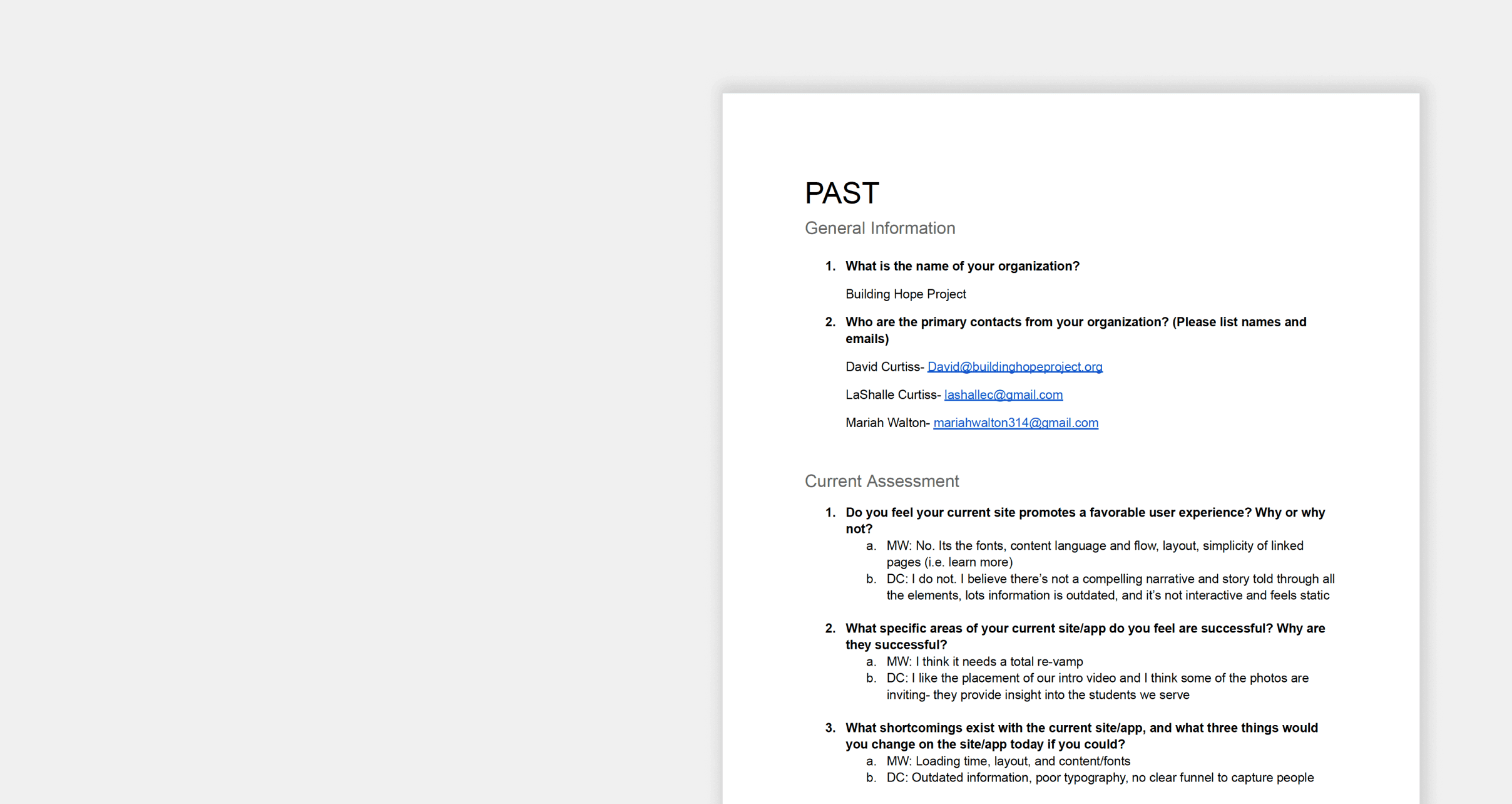
I began with stakeholder interviews and a consultation questionnaire, which revealed pain points such as poor typography, outdated information, and a lack of a clear story. User research focused on donor motivations, personal connection, visible impact, and credibility.
From there, I:
Redesigned site architecture: Developed a clear, intuitive navigation system to guide users toward “Donate” and “Get Involved.”
Rebranded the visual identity: Revamped logo, color palette, and typography to reflect credibility and hope.
Improved accessibility: Prioritized readability, responsive layouts, and faster page load times.
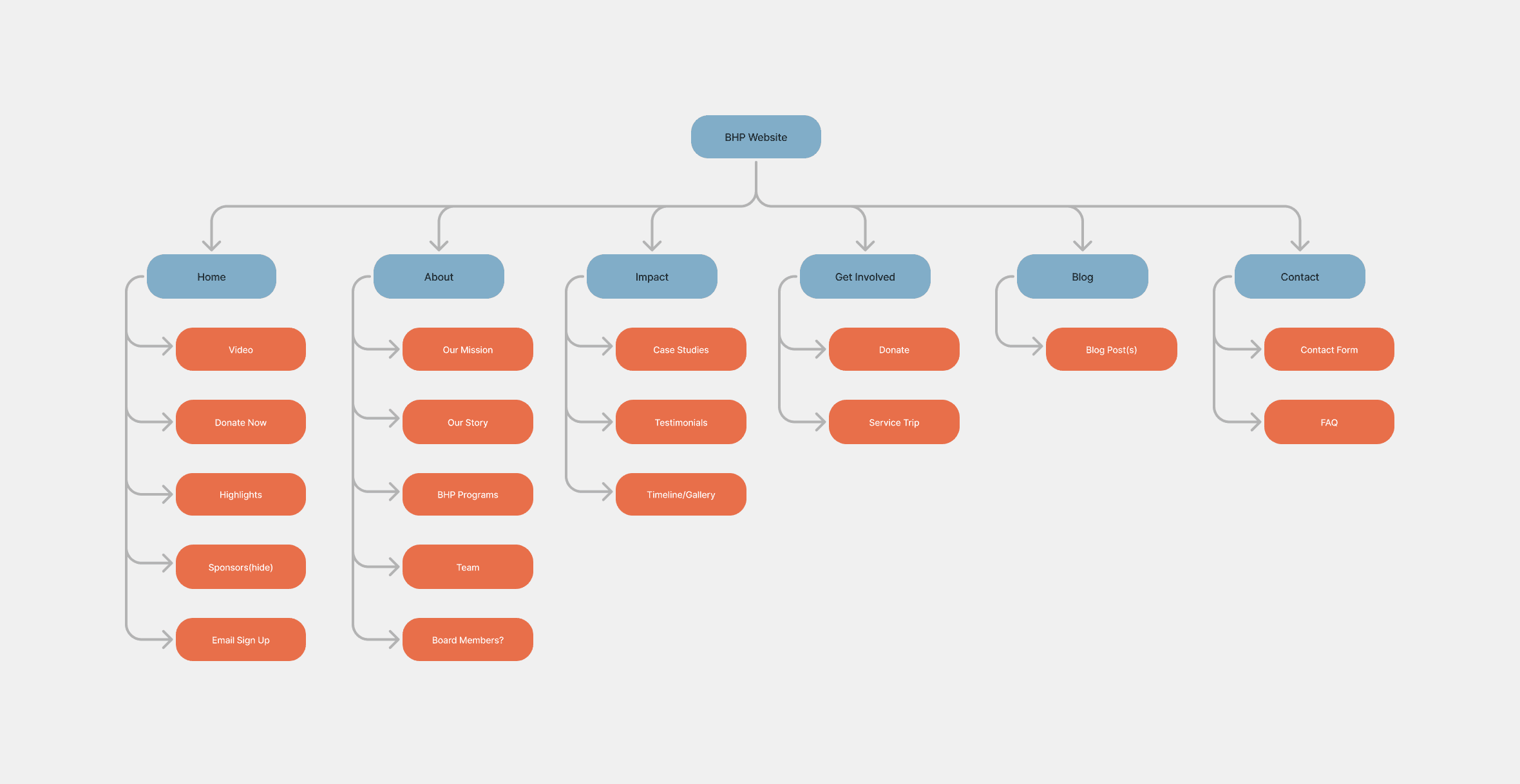
Sitemap
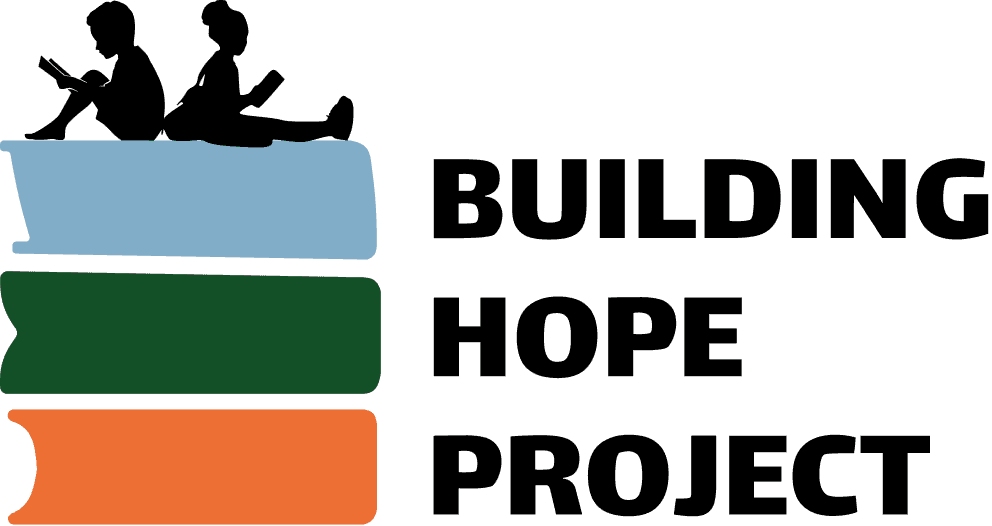
In the rebranding process, I aimed to retain some key elements while making a bolder statement to better reflect trust, hope, and vibrancy.
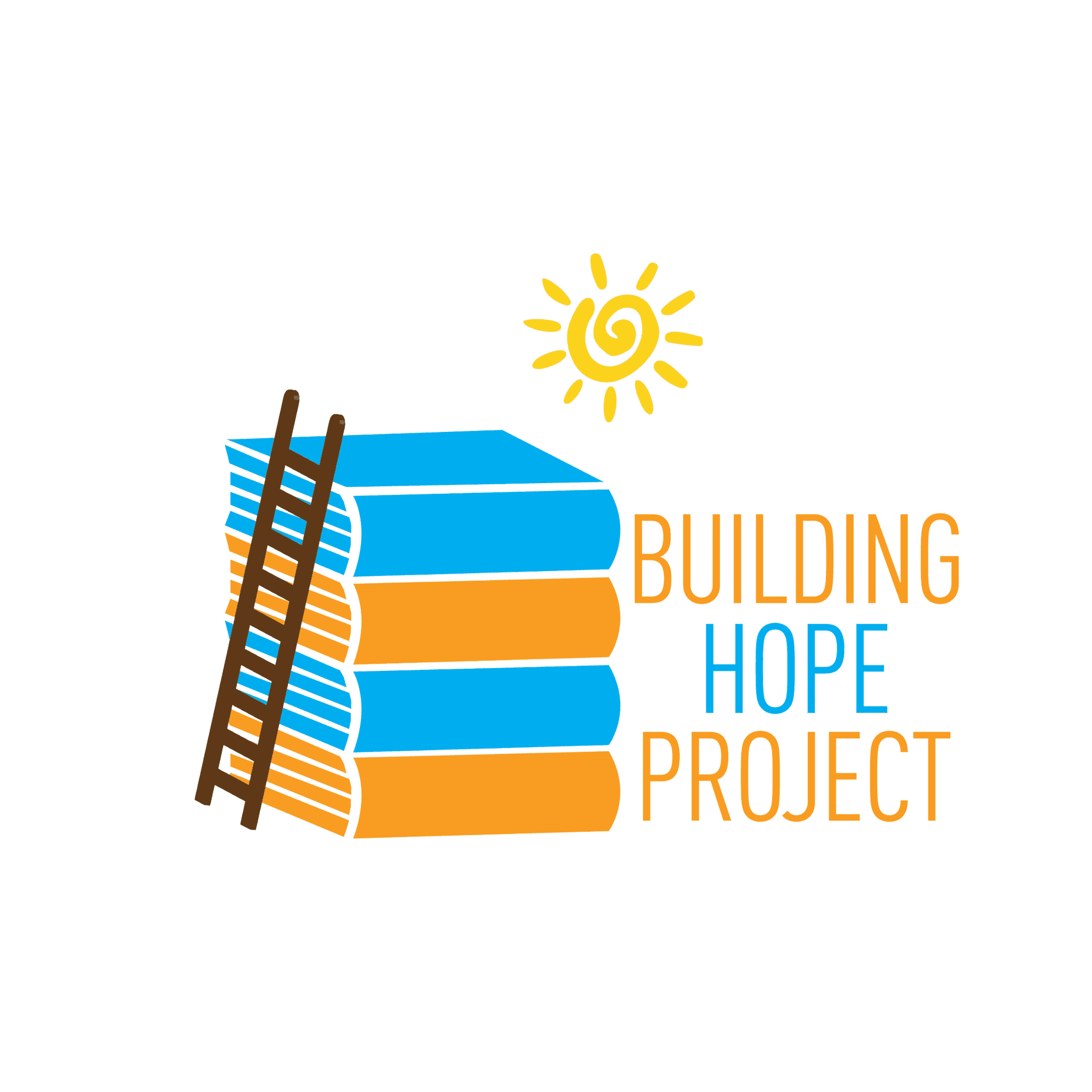
Old Logo
New Logo
04
Solution
Before: The old WordPress site felt static, with cluttered content, slow load times, and minimal storytelling. View Old Site
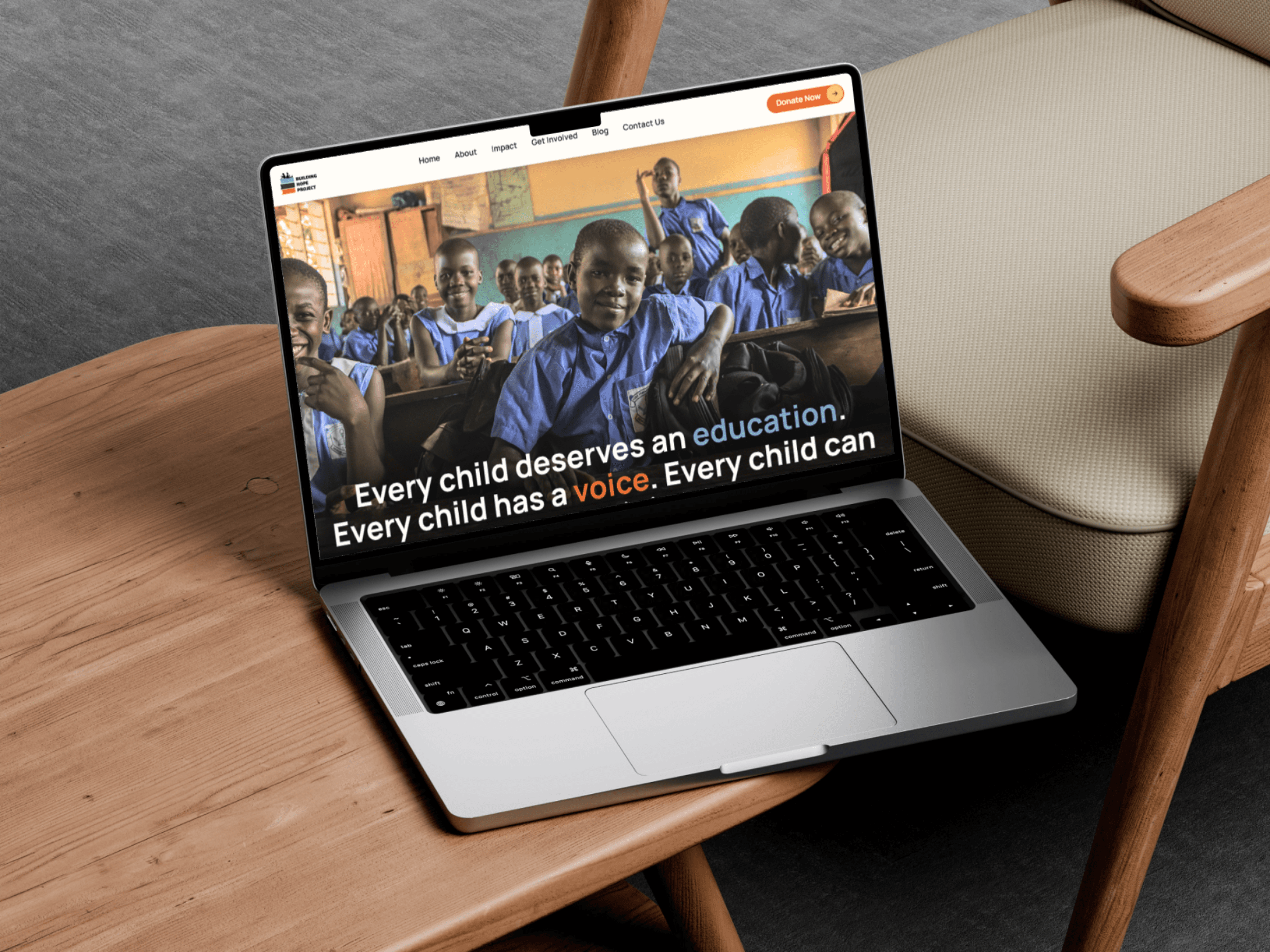
After: The new site, designed in Framer, features a streamlined architecture, bold visuals, and accessible calls-to-action. View New Site
Key improvements include:
Hero sections that establish legitimacy and impact.
Clear donation pathways with simplified user flows.
A cohesive brand identity visible across typography, imagery, and color usage.
Before
Outdated layout, poor hierarchy, and minimal story.
after
Bold visual storytelling with improved spacing and hierarchy.
05
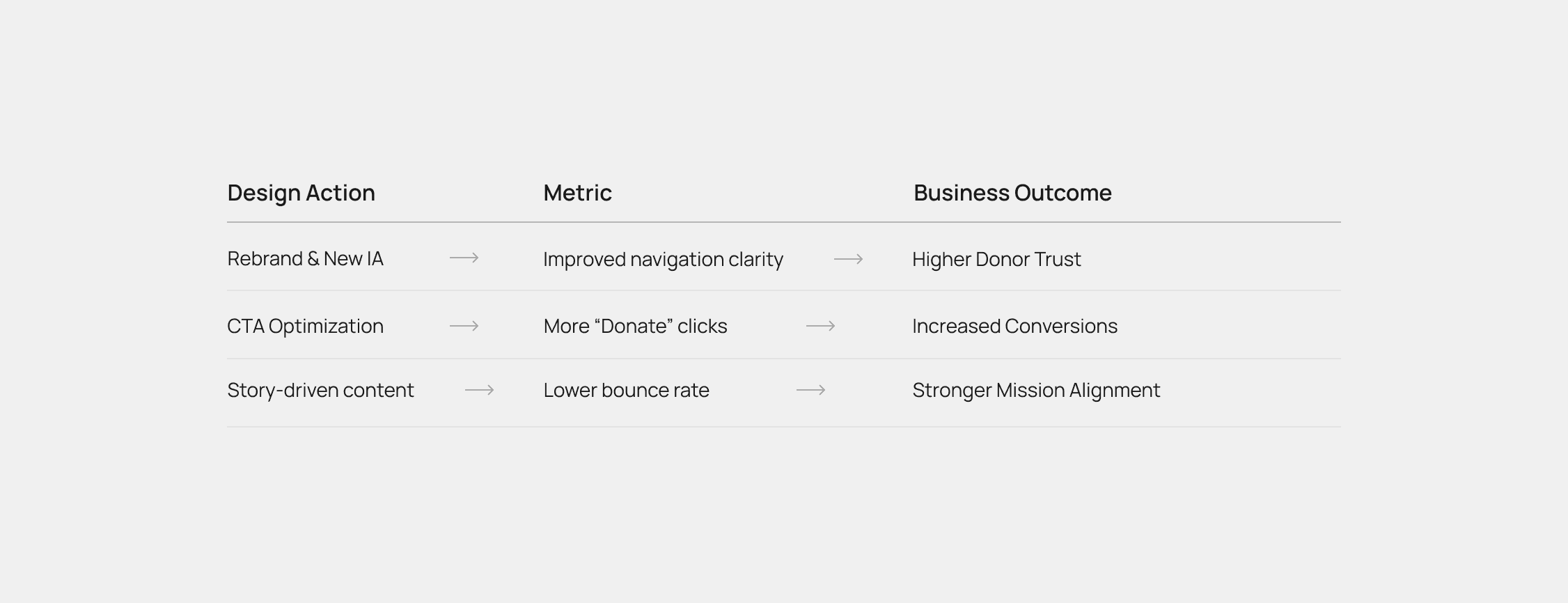
Design Action → Metric → Business Outcome
Rebranded identity → Stronger perception of credibility → Increased donor trust and engagement.
Streamlined navigation & CTAs → Improved conversion funnel → Higher donation rates and newsletter sign-ups.
Content clarity & accessibility → Better storytelling → Greater alignment with the organization’s mission, leading to stronger positioning within the NGO landscape.
While long-term data collection is ongoing, early stakeholder feedback highlighted improved usability and a more authentic reflection of the organization’s mission.
06
What worked:
The cohesive rebrand and redesigned architecture transformed the perception of professionalism and impact.
User-centered storytelling resonated strongly with stakeholders, aligning the digital presence with offline reputation.
What didn’t:
Limited usability testing before launch means opportunities for real-world feedback are still untapped.
Business meaning:
A clear, credible digital presence strengthens the Building Hope Project’s ability to raise funds, attract partners, and position itself as a serious NGO within the education and youth development space.
Next steps:
Conduct usability testing to validate navigation and donation flows.
Expand site features to include trip applications and impact stories.
Launch coordinated marketing efforts (social + email) to maximize visibility.